
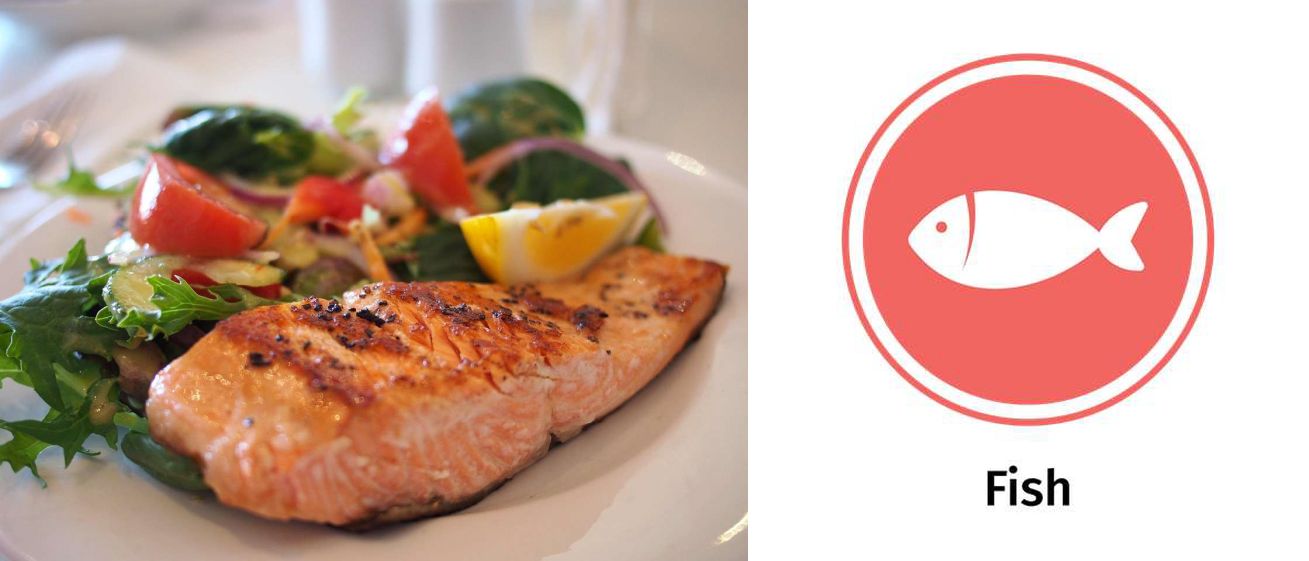
Fish
Whether fresh water or saltwater, white or oily, all fish are included here.
Many people with a fish allergy have identified which fish causes the allergic reaction. However, there are some that react to all fish. For this reason, it is best practice to identify the actual fish within your ingredients information.
Some savoury sauces contain anchovies, so it is very important to note this in your recipes and ingredient information.
This is another reason that information about ingredients is paramount.
Ask your doctor
We do not give medical advice.
Please always speak to your medical practitioner for advice if you suspect an allergic reaction, or are worried that you, or a family member, may have an allergy.
Other names to look for:
Oily fish
Salmon, Trout, Mackerel, Tuna, Sardines, Pilchards, Whitebait, Kipper, Bloater, Swordfish, Sprats
White fish
Cod, Plaice, Sole, Haddock, Pollock, Halibut, Skate, Hake, Sea Bream, Tilapia, Ling, Turbot, Monk fish, Red and Grey Mullet, Flounder, Dogfish/Rock Salmon/Huss
Fish Roe
Caviar, Cod Roe
Click on this link to download a printable A4 PDF summary
© Food Allergy Friends Ltd 2026
How we can help
Food businesses
Food businesses can demonstrate their commitment to customer safety and inclusion by gaining our Cater Allergy Safer recognition. This is designed to help food providers build trust and confidence among their customers, particularly those living with food allergies or intolerances.
By achieving Cater Allergy Safer status, your business makes clear that it takes allergen management seriously. It shows that you follow best practices and understand the importance of communication about ingredients and food preparation processes. In today’s environment, where more people than ever are affected by food allergies, visible reassurance can make a significant difference in where customers choose to dine or purchase food.
The recogition process provides guidance and practical steps to help businesses strengthen their allergen controls, reduce the risk of cross-contamination, and ensure staff are properly trained. Displaying your Cater Allergy Safer recognition signals to customers that their wellbeing is a priority and that your team is prepared to cater safely and responsibly.
Home caterers
If you are catering at home for someone with food allergies, you can also benefit from joining our Cater Allergy Safer at Home programme. This initiative is specifically designed to support individuals and families who want to prepare meals safely in a domestic setting. Members gain access to clear information, helpful resources, and ongoing support to improve confidence in managing allergens at home. Whether preparing food for a family member, friend, or small gathering, the programme helps you understand potential risks and how to minimise them.
More information
For further details about allergen guidance and food safety standards, more information is available on the Food Standards Agency website.