2 reasons why oats are gluten grains.

Aren’t oats naturally gluten free?

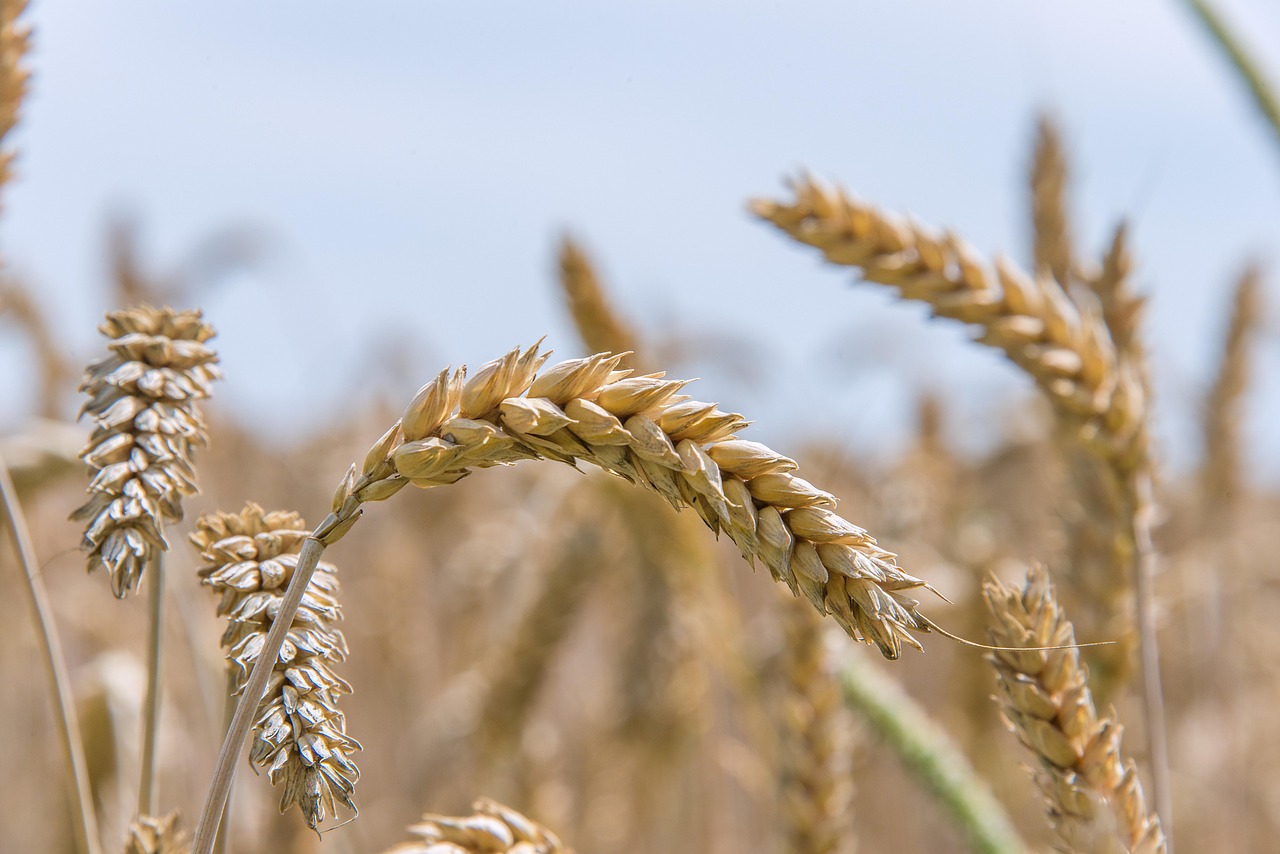
Oats ready for harvest

In a word, yes!

Oats in and of themselves do not contain gluten, thus are gluten free.

Read on to learn more about why they must be certified.

Why are oats included with ‘gluten grains’ in the UK list of notifiable allergens?

Allergen icon: Gluten

There are 2 reasons.

  1. Contamination: from harvest, transport, storage, milling, and making the finished product.
  2. It’s the protein: Gluten is the protein responsible for holding the product together, and is found in wheat, rye, barley, spelt, kamut, eincorn, triticale, and other ancient grains. Avenin, the protein in oats, has a very similar structure to gluten.

Let me explain.

To fully understand the answers to the questions above, we must first understand something about the different grains, farming history, our words, and processing.

 The different grains

Wheat

Wheat is widely used for making bread, pastries, cakes, biscuits, pasta, and sauces.

There are many different strains, grown for different products. For example Durum wheat is a very hard grain, very high in gluten, which is used to make pasta. The high gluten content will hold the shape of the pasta, so it doesn’t fall apart during processing and cooking.

For bread, the grain chosen has a lower strength of gluten. This is because we want a light, fluffy loaf of bread. Whilst it is the yeast that makes the bubbles, it is the gluten that holds them steady.

If you have ever made bread, you will know that the dough must be kneaded to bring out the gluten and you get a stretchy dough that cooks into a lovely loaf. If the gluten is not there, the bread will not rise, and you will have nothing more than a solid, inedible brick.

For cakes and pastries, yet a different strain of wheat will be chosen, with a gluten content that will hold the bubbles, but not go ‘chewy’.

As you can see, there are many different and very good reasons for different strains of wheat.

Rye

Rye is another hard grain which contains gluten.

The main ingredient of Whiskey or Whisky.

This is also used to make the very heavy ryebread or pumpernickel, but sometimes the fully ground flour may be combined with wheat to make a loaf of bread with a more dense texture.

Barley

Barley is historically used to make beer.

Whilst beermaking is the most common use of barley, it will also be found as barley-malt, which will be found in many food products from yeast extract to confectionary and your soothing bedtime malted drink.

Oats

Oats are used for many different things, porridge, muesli or granola for breakfast, snack bars, flapjack, even as a substitute for milk.

Oats have long been promoted for some health benefits, because of their high fibre content and slow release carbohydrate. They are said to ‘keep you regular’, lower blood glucose, and even soften your skin, now I cannot vouch for any of those claims, because all they do for me is cause intense pain.

But what about oats and gluten?

Oats do not contain gluten. The protein in oats, called Avenin, has a very similar chemical structure to gluten, and it is possible for anyone who is sensitive to gluten to also have a reaction to this protein. This is the 2nd reason they are included in the list of notifiable allergens.

A history lesson

My Grandfathers were both tenant farmers, my Dad was a farm labourer, and my Uncle (Dad’s eldest brother) tenanted a small-holding.

They used to speak of bringing in the corn.

There is an old Harvest hymn, ‘Come, Ye thankful people, come’, where there is a line that goes, ‘First the blade, and then the ear, then the full corn shall appear.’

We can still hear country folk talking of field of corn.

People feed corn to their chickens.

What is corn?

To go back to that line, ‘the full corn’ means the ripe heads of grain, ready for harvest, and the term applied to all the grains, wheat, rye, barley, and oats.

You only need to do an internet search of ‘chicken feed’ to find sack of ‘Chicken Corn’ to see that it includes a mixture of grains including maize, wheat, and perhaps some other grains.

Today corn is taken to mean Maize or what we know as Sweetcorn, corn on the cob, or popcorn.

The conclusion of this point is that corn and grain are often used interchangeably, they can actually mean the same thing.

Contamination

Once again, I will return to the farming days of my ancestors.

Small farms would grow a field of wheat, another of rye, one of barley, and another of oats. They will often be harvested a few weeks apart, but the same equipment might be used, thus the high possibility of grains being mixed.

The same sacks, storage, transport and milling equipment may be used for all the crops. These are more examples of sources of contamination.

Other practices included:

  1. Rotational farming, where the crops are grown one year, followed by animals to eat the remaining stalks and any dropped grains, then arable crops again.
  2. Stubble burning, this is no longer allowed in the UK because of safety near roads and climate concerns, but, this meant setting fire to the fields after harvest. The stubble was burned to cleanse the fields, destroy any residual, dropped grains, and return the potassium to the ground ready for another crop.

We also have to realise that, as harvest time has a small window, trailers and silos may be used to transport and store different grains in succession, these are not the easiest things to clean, and it could be cost prohibitive to have dedicated facilities.

This is before we even have to think about managing cross contamination in a factory or kitchen!

Gluten free oats

To be certified as ‘gluten free’, oats must be farmed, stored, and processed completely on their own, with no possible contact with other grains.

Glebe Farm explain it much better than I can. In the following link, they explain the lengths they go to in guaranteeing their oats are gluten free.

What does it mean to be certified gluten free? – Glebe Farm

Remember though, gluten free means less than 20 ppm, so there could be 2mg per kilo, not a lot, but enough to make someone very poorly.

Find more about ‘How much is too much?’ here: How much is too much? – Food Allergy Friends

Labelling: Do gluten free oats need highlighting in the ingredients?

In short, the answer is ‘Yes’.

Oats are an allergen, therefore they must still be highlighted.

It is also not legal to label something that contains gluten free oats as ‘Free from the top 14 allergens.’.

The Food Standards Agency makes this quite clear in their document: Food Standards Agency Codes : alerts/def/allergen/oats-gluten-free

How much is too much?

A little bit won’t hurt.

How much is ‘a little bit’?

A response to the document released by the Food and Agriculture Organisation of the United Nations and the World Health Organisation, in relation to setting threshold amounts for allergens. Link to the Food Safety Magazine article here: FAO/WHO Establishes Recommended Threshold Values for Allergens in Foods | Food Safety (food-safety.com)

A room full of hospitality business owners and staff, and a few scientists and lawyers.

In August 2023 I had the privilege of speaking at a conference about allergens in hospitality. I had been asked to talk about communication of allergen information, and common misconceptions about allergies and allergens. One comment that we often hear is, ‘A little bit won’t hurt’, or ‘It’s only a little bit, just try it, it won’t kill you’.

I’m now taking this opportunity to share part of my presentation, along with my thoughts on last week’s publication.

To be clear, there is no evidence that these recommended thresholds will be adopted or approved into CODEX, and it is intended for PAL (Precautionary Allergen Labelling), commonly known as ‘May Contain Labelling’.


A previous speaker had been very enthusiastic about the possibility of thresholds being set because he sees it as a positive step to help hospitality, food businesses, and the Food Hypersensitive (FHS) community. It was explained that a lot of work was going on to establish the amount of allergen it takes to produce an allergic reaction, and the findings could be used to determine whether a PAL is necessary for foods with levels below a set threshold. This could be similar to the current law in place, which regulates the definition of gluten-free as being 20 parts per million or below.

Kill or cure?

The medicine spoon above contains one gram of salt.

One gram is equal to one million micrograms or 1000 milligrams. All medicine is measured in either milligrams or micrograms, and we know that other therapies, such as homeopathy, Bach Flower Remedies, and more, treat maladies with minute amounts of substances. For example, the picture below shows a small pill equal to only 25 micrograms (ug) of Thyroid medication, used to replace a hormone in patients who’s thyroid doesn’t work properly. This tiny amount could be enough to keep them going for a day. Let’s go back to our gram of salt. That one gram is the equivalent weight of active ingredient in 40,000 of these pills.

We also know that many people rely on other medications, such as Losartan for high blood pressure. These are measured in milligrams and the usual dose for this is 50mg, therefore our gram of salt is equal to 200 doses of Losartan, which could be enough to save several lives.

Allergen thresholds.

OK, I’ve told you about a couple of medications, but what bearing does that have on allergen thresholds?

The two authorities that have joined forces to establish the thresholds, are saying that anything ranging from 1mg (mustard, celery, nuts) to 200mg (crustaceans) are acceptable levels for those allergens in foods. This is detailed in the link at the top of the article.

Let’s just think for a moment, 1mg equals 1000ug, therefore 1mg equals 40 doses of our life-changing thyroid medication, yet these people are happy to accept the risk of 1mg as a food ingredient with the potential to kill.

A university lecturer talks about ED numbers as reference points for the numbers of people who might be affected by any particular allergen. ED stands for Eliciting Dose, and is based on how sensitive people are, and how many people would potentially suffer an allergic reaction. The range is from ED01 to ED05, my understanding of this means that at the level 01, 1% of those with allergies would have a reaction, and at 05, 5% would have a reaction. It’s like playing Russian Roulette with people’s lives because every reaction will be different. There is no such thing as a ‘mild allergy’, or a ‘severe allergy’, only mild or severe reactions and these are so unpredictable that no-one can know what it will be like next time, neither the person at risk, nor their allergy specialist consultant.

For ED to be useful, the FHS person needs to know their individual trigger level. Currently, there is no way for a customer to know what their ED number is now, yesterday, tomorrow, next week, if ever. Allergic reactions can vary based on things such as combination with other food, environmental substances, stress levels, illness, exercise, as well as knowing what their trigger is initially. Life for the Food Hypersensitive person is literally like walking through a minefield moment by moment.

According to Allergy UK, there are around 2,000,000 people in the UK who are diagnosed with food allergies. Then there are those with Coeliac disease, EGIDs, Diabetes, etc. who all need to be careful with their food, making it an estimated between 20% and 40% of the population. That’s a very significant number of people.

The impact of FHS on food businesses.

Food businesses are already having a hard time. There are laws in place about allergen and nutritional information, for all food businesses. There is a higher, and growing, demand for ‘Free-From’ foods due to the ever-increasing numbers of people with food allergies. The development and manufacture of alternatives is both difficult and expensive. We know that food manufacturers often have things go wrong, this is evident by the number of recalls reported by the FSA. Whether for allergens present, allergens not declared, products incorrectly packaged, or a piece of plastic or metal in the food, there have been 51 allergy alerts, and 42 food alerts for England and Wales since 1st January 2023. This alone tells us that something is wrong, and that food manufacturing needs more support, training and monitoring. It already costs manufacturers thousands of pounds to test for a single product for the Free From market, pushing production costs higher.

Hospitality is already having the hardest time in history, still recovering from Covid-19 for those who survived. We have already seen thousands of pubs and restaurants close this year.

I believe it is unlikely that hospitality will be expected to test to the same levels as manufacturing, it’s not reasonable to expect them to absorb such costs of both time and finance. When food businesses take their responsibility to produce safe food for everyone seriously, and make sure they are legally compliant regarding allergen management, there really should be no problems catering for the FHS diner. As a top, award-winning chef said, and I have said it myself many times, ‘It’s not rocket science to cater for food allergies’.

What it means for FHS customers.

For the Food Hypersensitive diner, it is already very difficult to find decent, accommodating venues. It is also much more expensive to buy the necessary free from special foods, or their alternatives. Examples are bread and milk products. A regular loaf of bread in the supermarket costs between £0.75 and £2.00 for 800g containing 18 slices and 2 crusts, whereas a Gluten free loaf can cost £3.60 for 480g, containing approximately 10 slices. Fresh milk comes in at £1.06 per litre in a 2 pint carton, but if you get 4 pints it comes down to 88p per litre. For those needing alternative products, it can range between £1.80 and £2.33 per litre.

We know it costs more than regular options, we live with it day-to-day, therefore we expect food businesses to charge more.

Every FHS customer knows there is a risk of cross contact in most kitchens, even our own at home can be a source of contamination, no matter how hard we try. Eating out is no different as long as the staff are properly trained and following the correct procedures.

There are few and far between allergy specialist consultants, which means that even getting to see anyone is nigh on impossible, let alone adding the requests for useless ED levels.

IF such thresholds are adopted and implemented, it will be a nightmare for everyone. I envisage patients asking for tests to determine their levels for allergens that change daily, putting even more pressure on the NHS, and food businesses asking to know what a customer’s ED level is, before they will even let them see the menu, which is not far removed from some ‘disclaimers’ already being used. I have previously seen a statement outside a restaurant in Ireland, all be it some years ago, stating that they wanted to see medical evidence of allergies, i.e. they wanted a Dr’s note to ‘prove it’.

We cannot expect those with FHS to ‘stay at home’, ‘don’t travel’, ‘don’t socialise’. The numbers are growing year on year.

To Summarise

Allergies change day to day depending on other factors.

There are no hard and fast rules with allergies.

The amount of allergen that could cause a life-threatening reaction, could be immeasurable outside a laboratory setting.

Eliciting Dose numbers mean nothing to those with allergies, nor to the food industry, and should not be implemented as they will only cause further confusion. It is my view that such thresholds will be both dangerous for the food allergic community, and another expensive process for food businesses that will put even more out of business.

Hospitality and Manufacturing are in dire need of help to keep the food allergic community safe. They don’t need criticism and science making everything more complicated than necessary. What they do need, is help, support, advice, and encouragement.


Food Allergy Friends with Cater Allergy Safer is here for that very reason.

https://foodallergyfriends.co.uk

https://caterallergysafer.co.uk

www.foodallergyfriends.com

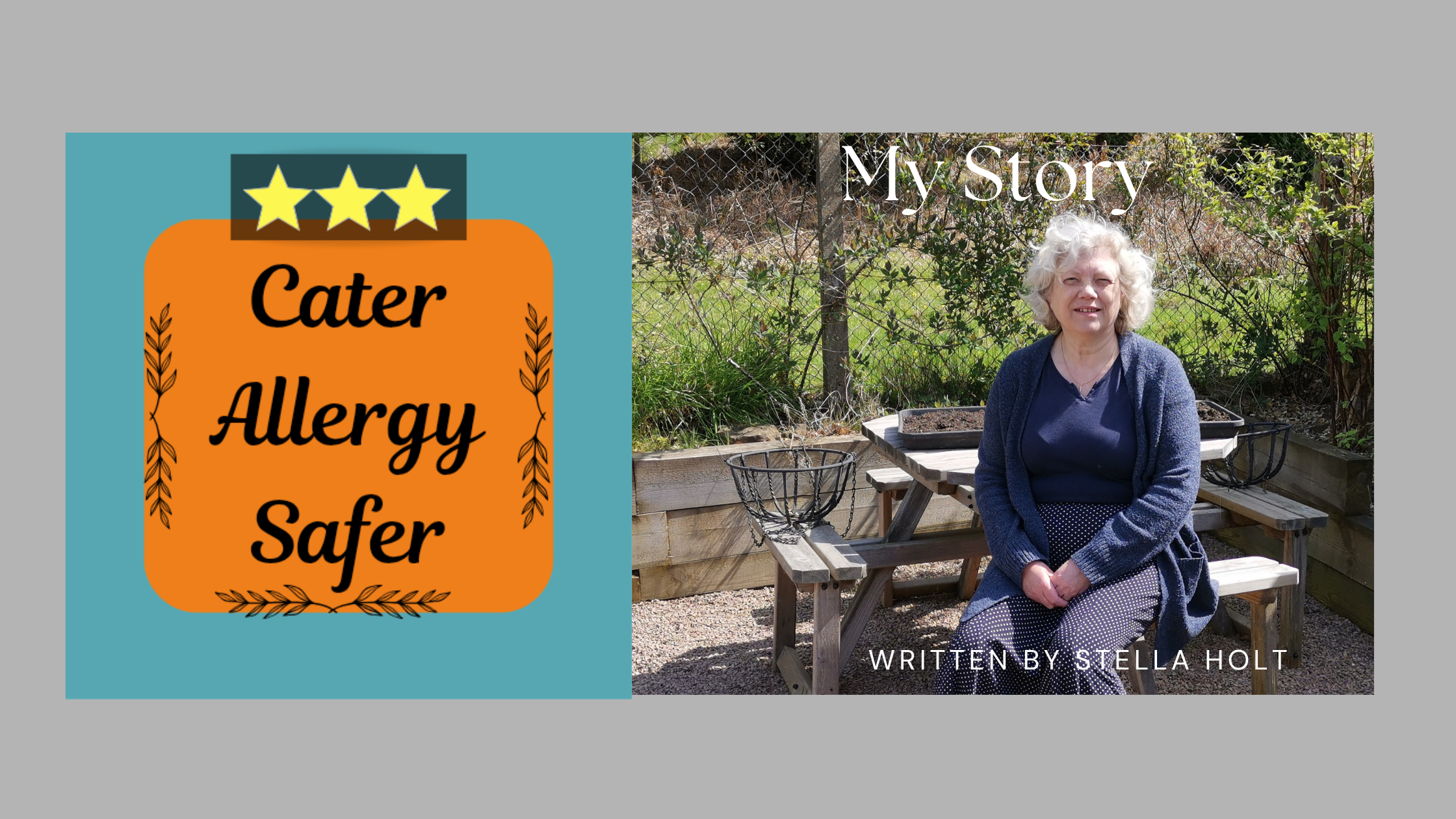
Pictuer of Stella, sat on her own at an outdoor picnic bench, alongside the Cater Allergy Safer logo. There is a caption "My Story", and written by Stella Holt.

It was a lonely existence.

It was a lonely existence

I was bullied for many reasons through my school life. Having the name of Digweed, being slow at everything, being tired, feeling unwell, getting allergy rashes, wearing glasses, being good at singing… These were all ‘good reasons’ for my peers to poke fun at, pick on, and avoid me, I was fair game! I was rarely invited to parties and I kept myself to myself. I didn’t have friends.
Read more

How it started

Cater Allergy Safer – how it started

Having grown up navigating food allergies and intolerances, Stella realised at quite an early age that she would need to learn to prepare her own food. The best way for her to do this was to go to catering college. After 2 years in college, learning the industry, Stella worked in many hotels, hospitals, schools, pubs and supermarkets. Read more